About the Maned Wolf
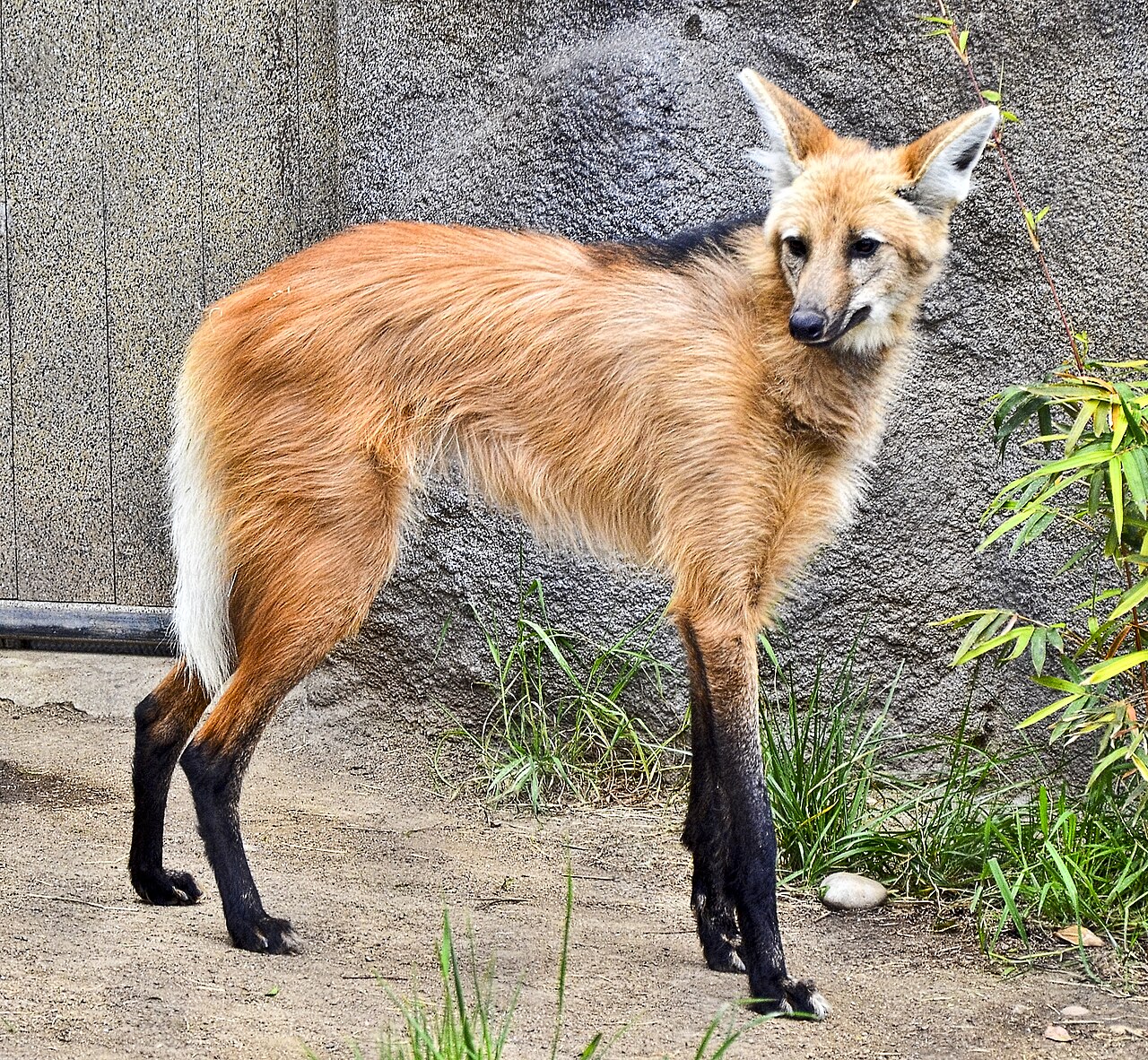
Description
The Maned Wolf is a canid primarily found in South America. Despite its name, it looks like a fox, though it is closely related to neither a wolf nor a fox. Maned Wolves primarily feed on common fruits and vegetables as well as small mammals, though they have been spotted eating larger animals in rare scenarios.
Taxonomy
The Maned Wolf's taxonomy is as follows:
- Domain: Eukaryota
- Kingdom: Animalia
- Phylum: Chordata
- Class Mammalia
- Order: Carnivora
- Family: Canidae
- Genus: Chrysocyon
- Species: Chrysocyon Brachyurus
Habitat
The Maned Wolf lives primarily in South America, typically in savannahs, wet and dry forests, grasslands, marshes and wetlands.
Adaptive Traits
- Omnivorous: Maned Wolves are highly opportunistic, as they will eat both plants and small animals that they can find. This helps them easily find food from either plants or animals.
- Long Legs: Maned Wolves possess long lengs that allows them to run quickly. This helps them catch prey that is fleeing or to escape a predator.
- Erect Ears: Maned Wolves' ears are erect, meaning that they stand up straight, which are used for visual signals. This helps them survive by allowing them to quickly signal to other Maned Wolves in the event of danger or when hunting.
Reproduction
Rituals: Maned Wolves attract wolves not with special calls or behaviors, but simply by increasing scent marking and vocalizations before mating.
Type & details: Maned Wolves, like most wolf and fox-like mammals, give a live birth. The breeding period is generally about 5-8 days. Females raise pups, and makes provide food.
Anatomical Structures
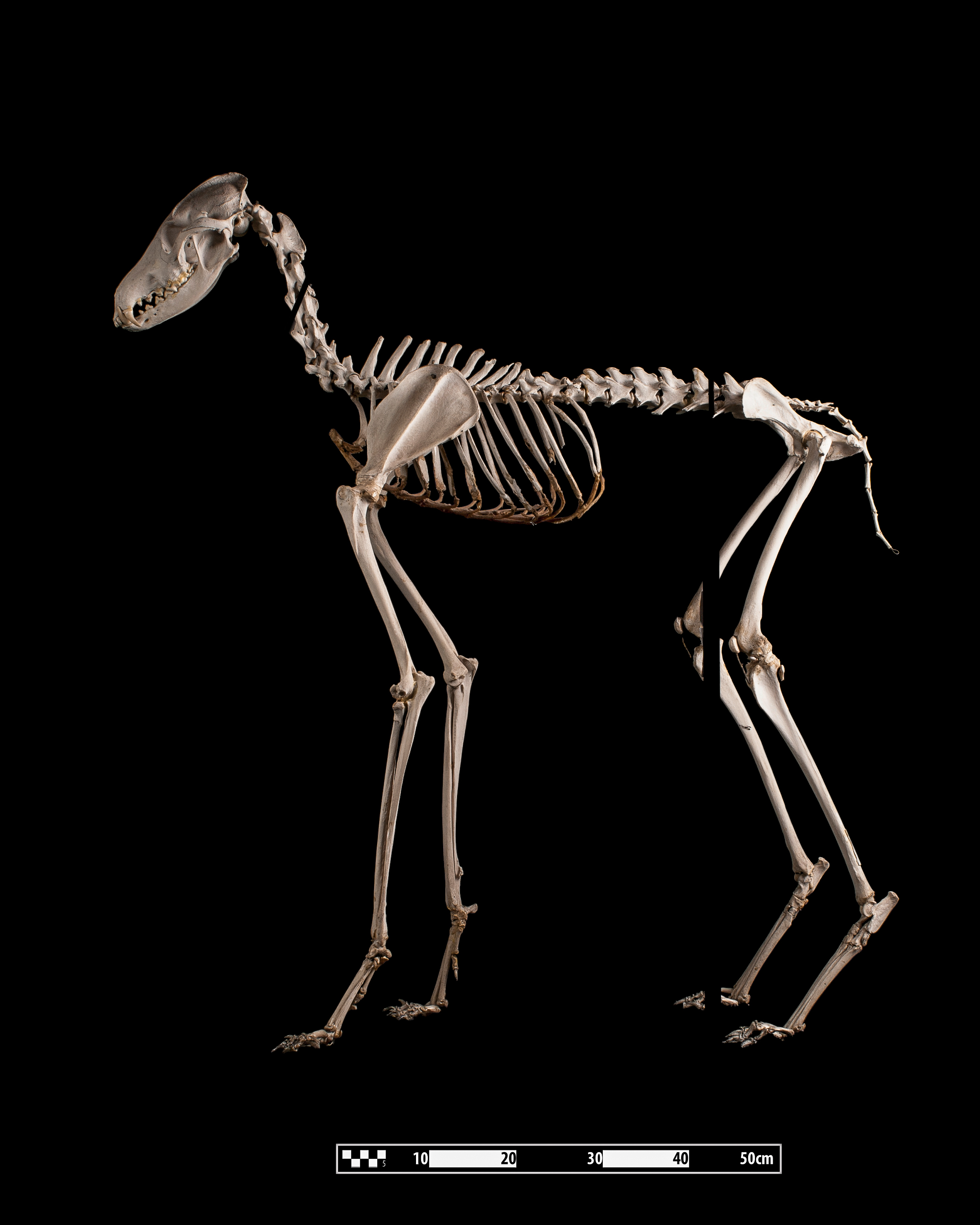
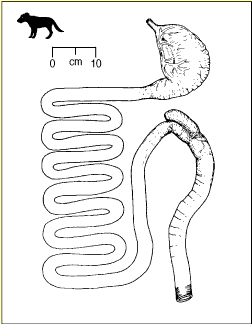
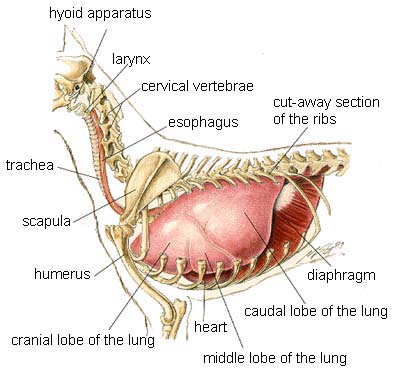
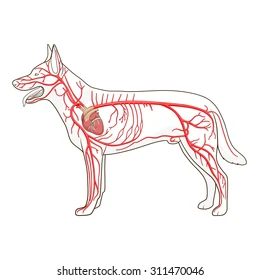
Below are the anatomical structures for the Maned Wolf. There is little data, so diagrams are provided.
- Skeletal Structure
- Digestive System
- Respiratory System (no data, showing fox)
- Circulatory System (no data, showing canine)
Patterns
Social Patterns: Maned wolves live in monogamous pairs sharing a 10 square mile (26 square kilometer) territory. They mark territory with powerful-smelling urine and feces. They do not howl, but instead they bark loudly or roar barks to inform mates and to warn other wolves. Maned Wolves are the least social of all canids, relying mainly on signals that work for long distances.
Activity Patterns: Maned Wolves are known to travel long distances when searching for food. They typically capture prey by using a stiff-legged pounce and then a series of movements that kills the prey. They are often caught to be eaten later, where Maned Wolves typically bury food under dirt and vegetation.
Feeding
What: Maned Wolves are omnivorous, meaning that they eat both plants and animals. They are highly opportunistic, so they will take any opportunity to get food, even if they don't need it. They typically eat small rodents and fruits and vegetables, with the rare case of larger game being hunted.
Eating: Maned Wolves, like most canids, eat with their mouth. They find no difficulty eating fruits and vegetables, since they do not fight back. However, they kill prey by pouncing on them and then biting the prey's neck or head, proceeding to violently shake it. This will often cause a neck snap snap or enough internal damage to kill the animal. They also may sometimes leap into the air to try and capture birds.
How: Maned Wolves have a variety of hunting techniques. To start, they rotate their ears to listen for prey in the grass, which helps them detect small rodents. They tap the ground with a foot to flush prey out and catch it, or they may dig after prey if it burrows. They may also leap into the air to catch birds and insects. They will also often times eat fruits and vegetables, if avaliable.